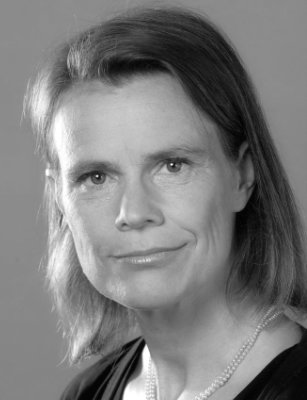
Nikola Biller-Andorno, Prof. Dr. med. Dr. phil.
- Director
- Institute of Biomedical Ethics and History of Medicine (IBME)
- University of Zurich
- Phone
- +41 44 634 40 80
Header
Nikola Biller-Andorno is a physician, philosopher and bioethicist with German and Swiss nationality. She is Professor and Chair of Biomedical Ethics at the University of Zurich and Director of the Institute of Biomedical Ethics and History of Medicine, a WHO Collaborating Centre for Bioethics.
Her work is situated at the intersection of biomedical ethics, health policy and public health. Her research focuses on the ethical governance of health systems, patient-centred care and patient experiences, digital health and artificial intelligence, and global public health ethics.
Nikola Biller-Andorno studied medicine at the University of Erlangen-Nuremberg and philosophy at the University of Hagen. She holds doctorates in medicine and philosophy and completed her habilitation in ethics and theory of medicine at the University of Göttingen. From 2002 to 2004, she worked as an ethicist at the World Health Organization in Geneva. In 2004, she was appointed Professor of Medical Ethics at Charité – Universitätsmedizin Berlin. Since 2005, she has been Full Professor of Biomedical Ethics at the University of Zurich; since 2007, she has directed the Institute of Biomedical Ethics, now the Institute of Biomedical Ethics and History of Medicine.
From 2012 to 2013, she was a Commonwealth Fund Harkness Fellow in Health Care Policy and Practice at the Harvard School of Public Health and the New England Journal of Medicine, and a Visiting Professor in the Division of Medical Ethics at Harvard Medical School. From 2013 to 2014, she was a Safra Network Fellow at Harvard University. From 2016 to 2020, she was a Fellow at the Collegium Helveticum, working on the digital transformation of medicine. From 2021 to 2025, she served as Vice Dean for Innovation and Digitalization at the Faculty of Medicine of the University of Zurich.
Nikola Biller-Andorno’s research connects biomedical ethics, health policy and public health. She examines how health systems can be governed in ethically and democratically accountable ways, how patient experiences can be heard and used in learning health systems, and how digital technologies and artificial intelligence can be responsibly integrated into medicine and public health communication. Earlier work addressed ethical issues in transplantation medicine, biobanks, human-subjects research and health-care financing.